Wednesday, May 5, 2021

Preparing for Summer.

This Summer the island of Maui will be packed! Covid restrictions are opening up. This past spring break of 2021 was very busy and tourists struggled to find car rentals, reservations at busy restaurants due to limited capacity seating, and available spaces for activities such as boat tours. International travel is limited. Maui was always a premier destination and never more so than now! Californians and many others from around the country have moved to Maui, or stay for an extended period of time. Home prices have gone up approx 20 percent! Rentals are more scarce, and prices on everything and anything have gone up!

Be prepared for a rental car shortage and very high prices. Restaurants are booked out two months in advance.

The CDC has remarked that less than 10% of the covid cases were transferred outside which helps ease fears around catching it at the beach. Hope to see you here this Summer and enjoy the UV rays that help fight the corona!

from Blog – Kite and Surf Lessons on Maui https://www.mauitruenorth.com/blog/preparing-for-summer

Via Sports http://www.rssmix.com/

Friday, April 30, 2021

HUUB wins Queen's Award for Innovation!

Here at Swim Smooth, we're super excited to announce that our wetsuit partner, HUUB, has just received the coveted Queen's Award for Innovation. Amazing! We'd love to take this opportunity to tell you a little more about the early days when Paul and Adam were visited on a dreary, wet September day in 2011 in Folkestone (UKd) by a true entrepreneurial visionary in the product development aspect of triathlon, Dean Jackson. 

Dean had a plan to fundamentally redesign how wetsuits were made and sought out Paul and Adam's help based on our unique Swim Type coaching methodology, to create a suit that better addressed the needs of a range of different swimmers and triathletes, taking into account varying levels of buoyancy. On the back of a paper napkin, overseen by a world-famous sports scientist and co-founder, Huub Toussaint, the three guys started to craft out what would ultimately become one of the world's leading wetsuit brands.

But before we tell you that story, let's hear from Dean on what this means for the company which today employs 24 passionate HUUBies, has created a world-beating independent cycling team, produces a massive amount of great technical wear, has the world's most famous chef, Gordon Ramsey, as one of its keenest users, and is still based at its home in Derby, UK.


From a Derby garage to Buckingham Palace in just nine years! 

HUUB, which has become a world leader in triathlon gear, has now received Royal approval after being awarded the Queen's Award for Innovation.

The awards are the most prestigious in the UK and celebrate the success of exciting businesses which are leading the way with pioneering products or services. HUUB was put under the microscope of a stringent panel of judges before they passed their recommendation to Her Majesty for approval.

HUUB's founder, Dean Jackson said, "To be recognised in the Queen's Awards is amazing. I would never have dreamed when starting this business on my kitchen table nine years ago that we would be recognised for what really makes HUUB special... Our innovation!

"We constantly strive to make athletes better and faster and our sport more fulfilling. We are relentless in the pursuit of performance, and innovation sits at the heart of everything we do.

"I'd like to thank the team for driving our ambition and aspirations to be the very best in our field and for believing in the crazy ideas that drive innovation and experimentation.

"There is a saying, 'if you do what you did, you get what you got', and we believe that to make an innovative change, you need to do, think and explore where others have failed to go or failed to see the benefit.

"Winning the Queen's Award is for the whole business. It's a reflection of the team's dedication to pushing thinking and challenging the norm."


Research | Science | Reality

Back on a dreary day in September 2011 as Swim Smooth Head Coach, Paul Newsome, was waiting for the call to swim the English Channel, Paul and Adam were visited in Dover by a true visionary in the product development aspect of triathlon, Dean Jackson. 

Dean had reached out to Swim Smooth to help him create a new range of exciting wetsuits which would be named HUUB after one of Paul's most-admired sports scientists, Professor Huub Toussaint. Dean coined the tagline "Research | Science | Reality" in recognition of Dean's research and understanding of what the triathlon population needed from a new wetsuit at that point, Huub's ability to test and back-up any innovations with his stringent scientific background, and Swim Smooth's work on the reality "coalface" with the swimming and triathlon population in a coaching context.

On the back of a paper napkin in a Costa Coffee in Folkestone, Dean, Paul, Adam, and Shelley Taylor-Smith (7-time world marathon swimming champion who was there to mentor Paul for his big swim), began discussing some new concepts for wetsuit design centred around Swim Smooth's Swim Type coaching methodology. In a coaching sense, we have used this system extensively since 2010 to help our coaches and swimmers determine a starting point for their individual stroke correction needs based on such things as height, build, gender, experience/ability, age, wingspan, etc. Dean was curious to know what we had learned about how these different factors impacted a swimmer's technique, specifically from the point of view of buoyancy profiles in the water. Did different types of swimmers require a different type of wetsuit based on how they normally swim without a suit?

Most people wrongly assume that everyone loves and benefits from the most buoyancy in a wetsuit as is legally allowed, however our own observation, awareness, and thousands of hours working with a range of different swimmers, suggested that this wasn't the case - some people positively hated wearing a wetsuit and resent those who spend the big bucks and suddenly become significantly faster! 

The second wrong assumption people were making if they did believe that there could be a need for different levels of buoyancy between swimmers, was that more buoyancy for a guy would be better than more buoyancy for a female. Again, this assumption - whilst feasibly correct 70% of the time - didn't cover the whole gamut that we were seeing day-in, day-out as coaches. We were observing that wetsuit selection and buoyancy profile could be more closely linked to the swimmer's type (which is gender independent), than their specific gender and the assumption that all female swimmers float better than men.

Let's look at three extreme examples which helped form the basis of two of HUUB's early wetsuit range - the 3:5 Archimedes, the 3:3 Aura, and the 4:4 Aerious:


Our Classic Arnie Swim Type and the 3:5 Archimedes wetsuit:

Typically male, but many female Arnettes do exist, especially those with very lean, muscular frames of the type that might be doing Ironman at a relatively serious level. This is the classic swimmer who loves using a wetsuit as it helps to offset their key stroke flaw, low sinking legs. This swimmer loves using a pull buoy (and eventually buoyancy shorts and HUUB's "kickpant"), because of how this added buoyancy both lifts the legs and keeps them closer together, thus reducing drag. By creatively reducing buoyancy in the upper body of the wetsuit (3mm) and increasing buoyancy around the hips and legs (5mm), the 3:5 Archimedes wetsuit was the ultimate speed weapon for the type of swimmer who is ordinarily limited by their swimming prowess in the pool.

Click image above for a cool comparative wetsuit vs non-wetsuit video with an Arnie


Our Classic Kicktastic Swim Type and the 3:3 Aura wetsuit:

Many assume that everyone loves a wetsuit, but not a Kicktastic! In fact, most Kicktastics are not truly slower when wearing any wetsuit, it's just that they don't see the same gains that their Arnie / Arnette counterparts do and this has been historically frustrating for them. Together with Dean and Huub, we helped create the world's first specifically designed low-buoyancy wetsuit to cater to the fact that a Kicktastic's body profile and horizontal position in the water is already their key strength. Adding more buoyancy than what is necessary to keep the swimmer warm in colder water is simply unnecessary and contributed to the feeling of "unbalance" and awkwardness that a Kicktastic would repeatedly tell us about. The 3mm body combined with the 3mm legs saw a much more balanced position in the water for the Kicktastics who tried the original Aura suit and it soon became known as "the wetsuit for people who hate wetsuits"!


Overly buoyant wetsuit combined with a very strong kick = disaster / frustration


Our Classic Smooth / Swinger Swim Type and the 4:4 Aerious:

Even if you don't have a massively strong leg kick, but swimming is your background, chances are a) your buoyancy without a suit is already pretty good, and b) you want a wetsuit to feel like you're not wearing one! The 4mm body combined with the 4mm legs of the original lower-price-point Aerious became a quick crowd-favourite for those from a swimming background wanting to try triathlon for the first time. In fact, here's Australian National U18 open water swimming champion and this year's 4th place in the open category (narrowly missing a birth to the Tokyo Olympics by just 12 seconds), using a new version of Aerious just this morning in the Swan River here in Perth where we're undergoing another short COVID lockdown - Byron loves this suit!


Launch:

The HUUB wetsuit range was launched in February 2012 at the London Triathlon Show which we were hugely proud to be part of. Check out the initial release blog here, which shows some of the initial testing and analysis which Adam went to oversee at the hi-tech InnoSportNL facility in Eindhoven.


Further information:

Here are a couple of classic blogs from yesteryear talking about the link-up between your Swim Type and your wetsuit choice: 

www.feelforthewater.com/2013/04/how-to-choose-wetsuit-to-suit-your.html 

www.feelforthewater.com/2011/07/are-you-slower-in-wetsuit.html

www.feelforthewater.com/2012/03/better-wetsuit-design-for-women.html

We would like to send the whole HUUB team a massive round of applause and kudos for what they achieved in such a short space of time - epic stuff!


Swim Smooth

Via Sports http://www.rssmix.com/

Thursday, April 1, 2021

The Secret To A Life Of Happiness And Longevity?

Justyn Barnes, author of the brilliant book Ikigai - the Japanese secret to a life of happiness and longevity states that the word 'ikigai' in the simplest terms describes “value in living” or “reason for living”.

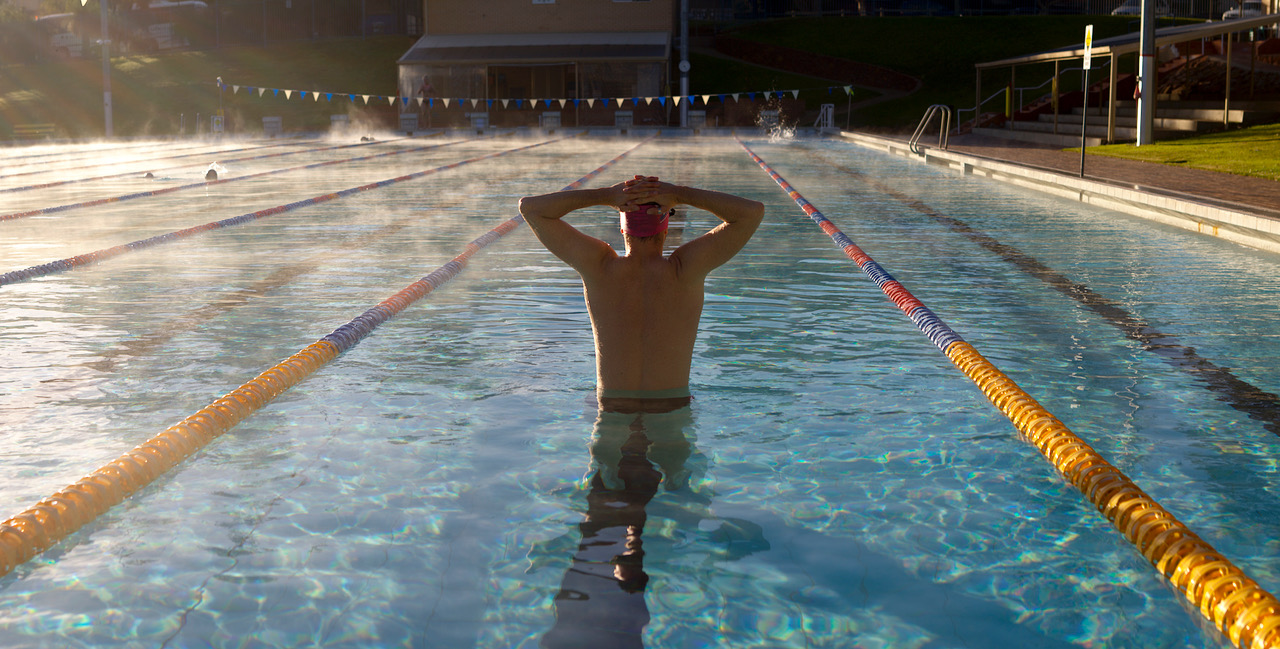
Another beautiful sunrise at Claremont Pool, Perth

Among the myriad interpretations of the word, Barnes states that ikigai can be thought of as “a reason to jump out of bed every morning” and a “springboard for tomorrow”. How true it is that the morning ritual of your swim can be both that reason and something that aids you in your pursuit of your current goal, whatever that may be. 

Ikigai can be seen in its truest form every morning in the pools, lakes, rivers, oceans, seas and lidos right around the world. As the world starts to finally move towards a better place, so too do we hope that your own personal Ikigai can flourish once again.

Swim Smooth!

Via Sports http://www.rssmix.com/

Wednesday, March 31, 2021

Maui and Covid times.

Looking back at the last year of covid. Truth is, Maui True North was halted like everyone and then accelerated to being busier than ever during the second half of 2020! We went from surviving the initial part to thriving during the second half of 2020! When the lockdown happened the island cleared out, hotels shutdown, fields were filled with car rentals. Rental car companies shipped thousands of cars to the mainland. Streets were quiet. Beaches emptied. Luckily we were able to access the ocean! Surfers and Kiters were out in full force! For those of us stuck here this was a historic time to enjoy the island without any traffic or tourism. We had it to ourselves. Many small business owners lost it all. Long term to short term transplants moved back to the mainland. Ocean lovers went out and played every day! We took full advantage of it! Truly was a “locals only” feeling. Lessons started to pick up during Summer after beach parks reopened and commercial activities were back in operation. Locals who found themselves with extra time on their hands decided to take up kiteboarding. We had a steady flow of local business.

October 15th Maui waived the two week mandatory quarantine for those tested by one of the partners. It was a shock to the system but a much needed boost to the economy. Maui had the lowest unemployment numbers pre pandemic then we had the highest at 36 percent!

With the worst of it behind us and Maui reopening seemed like the entire state of California came for kite lessons! Travel was limited and Maui was one of the safest places and only options for kiting. That kept us busier than ever! Surf lessons were still going and a few other side activities not advertised but will include with customized package. We had clients coming in that wanted the private boutique experience we are known for. MTN is mostly “word of mouth”. Email any inquiries to help customized your visit to Maui. When we can’t do it we will refer you to the best outfit that can. From private chefs, to the best places to eat, we can guide you in the right direction!

Heading into 2021 we are expanding and growing! The world is reopening and the future of Maui True North is brighter than ever!

Spring break 2021 is in full swing on Maui! Seems like old times! Maui isn’t what it was pre pandemic but things are looking alive!

Aloha!

Thank you all for your support!

Brett Sheerin

Owner/operator

from Blog – Kite and Surf Lessons on Maui https://www.mauitruenorth.com/blog/maui-and-covid-times

Via Sports http://www.rssmix.com/

Friday, March 19, 2021

Using Heatmaps To Improve Your Swimming

Our new digital platform at swimsmooth.com includes some very special new features to improve your swimming. One of which is the ability to monitor your stroke technique just by wearing an Apple Watch as you swim:

Two years in development, we call this new patent-pending system "Stroke Insights" and it's set to cause a revolution in swim coaching. No only can the system detect faults in your stroke technique but it can predict the time saving you will gain by improving your stroke and help you monitor your improvements over time.

Introducing Heatmaps

During an average swim session you are likely to swim around 1000 strokes with each arm. Using your Apple Watch, the Swim Smooth app records every rotation and acceleration of the watch on your wrist 50 times per second as you swim. Using our special algorithms developed by Swim Smooth's Adam Young, we can track every single stroke you take in three dimensions. You might know Adam as a swim coach but he also has a background in maths and engineering which has made this stroke tracking technology possible.

Using these algorithms, combined with a bio-mechanical model of the human body, we can accurately show you your stroke position at key areas of stroke technique. For instance Perth squad swimmer Phip pulls wide on her left side:

Here's her Stroke Insight for her left side pull through from the Swim Smooth platform:

Notice the dots on the heatmap. Every dot represents a single stroke, so you can see the variation in your stroke technique. There's 300m of data on that heatmap (approx 150 left arm strokes).

Note that the heatmap dots don't show the position of the watch, instead we've calculated the position of the centre of your palm and shown that instead. That's much more interesting from a coaching perspective.

The rendering of the swimmer behind the heatmap shows the most common position in the heatmap, together with a green "target zone" which you should be hitting. Those swimmer images make it easy to interpret but don't ignore the heatmap - very often you can glean extra information from it as we'll discuss below.

Heatmap Spread

The great thing about a heatmap is that it gives you an idea of the variability in your stroke. Very experienced swimmers tend to have tight heatmaps as their stroke is very repeatable:


But if you are new to swimming you are likely to have much more variability from stroke to stroke and so will see a bigger spread in the datapoints:

Pay attention to that in your own heatmaps, many of your strokes may sit within the target zone but others may fall outside - this could happen as you get tired or on a breathing stroke.

The Impact Of Breathing

If you've been following Swim Smooth for a while you will know that breathing can have a huge effect on your stroke technique. In fact we often say If something is going to go wrong in your stroke, it will happen when you breathe. With heatmaps you can see this change in your stroke really clearly, particularly on your arm recovery and pull-through underwater.

For example here's Myffy's data, who has two really distinct clusters in her pull-through heatmap. The higher cluster is on a normal stroke and is sometimes a little close to her body. The lower cluster is when breathing as her arm collapses downwards giving a deep pull through:


It's clear to see the same thing from her video footage:

It's normally obvious which is the breathing cluster as it shows as a deterioration in technique, typically becoming deeper or wider on the pull through. 

With arm recovery most swimmers rotate their body more when they breathe, bringing their hand higher and possibly more inboard. So clusters representing breathing strokes are normally higher and likely closer to the centre line: 


How Far Should You Swim?

The Swim Smooth app on your Apple Watch collects motion data for up to 90 minutes of swimming so we normally suggest you simply record your entire swim session in full and see the results afterwards. That said, you can record data from a single length of the pool and see a small heatmap for it.

To get data from both sides of your stroke simply swim on one side (we suggest at minimum of 100m but ideally at least 400m) then undo the strap, move to the other wrist and continue swimming. Don't touch any settings, just move it and start swimming again. The watch will detect the wrist change automatically.

Quick tip: Stick to freestyle when swimming on your "opposite" wrist as stroke type detection is less accurate than on your normal wrist.

For further information on how to best use your Apple Watch sign up for a free account at swimsmooth.com and watch all our introductory videos here: swimsmooth.com/library/39FPUQZLbDxdtPQT2jT0NJ

Here's the system's crossover detection:


Trial Insights Completely For Free

Keen to discover your own heatmaps? Signup for a free trial of our new platform at swimsmooth.com (there's also an iPhone app here) and we'll analyse three of your swims completely for free to test things out and get you started.

At the moment this technology is only available for Apple Watch users but we hope to be able to bring to other smart watches in the future. You can use any Apple Watch from series 2 onwards (there is no difference in accuracy between devices).

What If I Don't Have An Apple Watch?

Although you need an Apple Watch to get Stroke Insights, the rest of the swim analysis platform (including our extensive training plans) are fully compatible with Garmin.

In fact, you can use Swim Smooth without wearing a watch at all, just tick off training sessions as you go and start to receive coaching feedback from how you are training.


Swim Smooth!

Have a question on Stroke Insights / Heatmaps? Post it in the blog comments here: www.feelforthewater.com/2021/03/using-heatmaps-to-improve-your-swimming.html

Via Sports http://www.rssmix.com/

Friday, March 12, 2021

7 Effective Strategies to get you back to your swimming post-COVID: lessons learnt in Perth


 A sad sight: many swimming pools all around the world have been closed now for nearly 12 months - hopefully, an end is now in sight!

It seems like an age ago since we posted this video describing how much swim fitness you could expect to lose during the first wave of lockdowns due to the coronavirus pandemic. In fact, it was almost precisely 12 months to the day since we did. Back on the 15th March 2020, here in Perth, we’d been instructed that the wonderful Claremont Swimming Pool would be closed for a period of 4 weeks, and given that many parts of the world also had that similar mindset at that entirely uncertain time, it seemed prudent then that a video about how much swim specific fitness you might lose in a month was probably about right. How wrong we were! 

Whilst the technicalities and physiology of detraining mentioned in the above video still hold value, for many of you, the magnitude of time proved to be way off the mark. However, with the various vaccines around the world now starting to see some positive results and pools in many parts of places like the UK looking set to re-open in April, a return to the pool for many of you is now imminent. 

That all being said, if we have learned anything here in Perth about how our swimmers were initially anxious about their return to the pool (which for us, as mentioned in this blog last month about how fortunate we’ve been here, was June 8th, 2020), we are sure that the following points are likely to be going through your head as you contemplate kicking off your swimming afresh:

  • “How will I feel? Will I be even able to 'feel the water' at all?”
  • “Will all my fitness be completely gone?”
  • “Booking a lane for 45 minutes seems like such a stress and takes the fun out of relaxing into my swim!”
  • “What if I really don’t enjoy the experience?”
  • “Is it still too early? Am I physically at risk?”
  • “What if this just confirms that I’ve found a new affinity for open water swimming - or another sport - and really don’t relish a pool swim any longer?”
  • “What if this is just a temporary re-opening - will I just be wasting my time, effort, and money with so much uncertainty abound?”
  • “How exactly should I get started again?”
  • “What if I injure myself in my first few sessions back?”
  • “With no events on the horizon, is it worth me building up for anything anyway?”

These points were all echoed by our squad here in Perth, and whilst this was now 9 months ago, we hope that the benefit of foresight on how our swimmers over here dealt with these challenges will help you address some of these perspectives yourself as you venture back to the pool.

Loss of feel for the water:


Let’s start off with the aspect of loss of technical skill in the water.

One of our very earliest blogs here at Swim Smooth dating back to September 2009 was “Six is a Magic Number” - which was a short post about how, when getting back into swimming after a period of absence, it will typically take you about six sessions to regain some degree of “feel” and affinity for the water. Usually the first session feels surprisingly good as you will ordinarily place little pressure on yourself to perform well. Just experiencing being back in the water and being grateful to return to the thing that you love will carry you through.

However session two often feels a little worse due to some residual fatigue and maybe the expectation of wanting to achieve something. Then, with a good mental approach, a little tenacity and a commitment to consistency, sessions 3 to 6 will all start to improve. Coach Paul explains this very scenario from back in 2010 when he returned to swimming after a 16 month lay-off as a new parent, in our blog entitled “Dreading Getting Back to the Water?”

Loss of swim specific fitness:


Let’s move on to the elephant in the room - swim-specific fitness, and perceived lack thereof.

Back in June 2018 we conducted a little experiment with the Perth Squad entitled "(Project) Going backwards in order to go forwards!” which essentially involved slowing everyone in the Squad down by 2 seconds per 100m on their current CSS times. A few thought this was a silly idea, “why slow us down when we’re already going well?” to which we simply replied, “sometimes, the positive benefit of being able to confidently hit your target times - even if it means you finish a session thinking I have more in the tank - can be highly beneficial as a line in the sand and a place to bounce back from!” 

The experiment worked really well and we were able to bring everyone’s swimming back up to a great point within just 3 or 4 weeks. Chances are you won’t have any idea where your CSS pace currently is upon returning to the pool after such a long hiatus, so the advice here is to be ultra conservative. Say you were at 1:40 per 100m for CSS prior to your lockdown, and that was 12 months ago, be really audaciously cautious and aim for some target paces of say 1:50, or 1:56 or even 2:00 per 100m in sessions 3 to 6 of your Magic Six. It might prove to be way too slow, but if it does, it’s given you a little structure, a little focus and something to start back from. Don’t be in a rush to build back too quick, take your time and use it as a chance to dial in some perfect pacing - that swim specific fitness will come back before you know it!

45 minutes is just too stressful to arrange:


So, what about the perceived stress of 45-minute individual pool bookings being too difficult to organise and not worth it? This did prove to be a bit of a sore spot for many of the swimmers here in Perth, especially as the automated booking system proved to be technically challenging for some. Those that did persist though often had the wonderful opportunity of a whole lane to themselves, and whilst this might be a rather lonely experience initially, we’d encourage you to immerse yourself in this and see it as a chance to see what it feels like for many an elite swimmer on a daily basis. 

You’ll be surprised by what you can fit in within 45 minutes with a well-structured program too. In the new version of the www.swimsmooth.com platform, it’s now possible to scale every one of our 1,000+ sessions to a time frame that suits your allotted pool booking spot. The system doesn’t just chop off the start and finish, it intelligently scales the entire session to give you a mini version of what you would do if you had the luxury of a typical 60-90 minute session:


Concerns about enjoyment factors:


First and foremost, COVID has taught many of us to reprioritise things in our lives and to focus on doing what we love above all else. If you are a triathlete, chances are swimming has been your weakest discipline and potentially this has meant that, at times, swimming hasn’t always been as enjoyable as say a ride in the hills with your mates or a run in the park with your dog. It’s very normal therefore that, with a forced hiatus, you might be questioning how much you’re going to enjoy this return to your swimming and whether or not it might be a bit of a letdown.

Try turning this notion around to one of having the opportunity to start afresh with a clean slate and to focus on maybe new areas of your swimming that you haven’t done to date. A great example is developing your ability to breathe bilaterally. This is great for your symmetry and will drastically improve your versatility in the open water. We’ve seen many of our squad swimmers here in Perth do just this and have had fun setting themselves a relatively simple challenge (at least in concept!).

Now might be the perfect time to “carpe diem” for your swimming and turn those concerns into positive actions that you’ll reap rewards for down the line!

Your new-found love of open water swimming:


Last month, here at Swim Smooth, we spoke about how amazed we’ve been that so many of you have turned to the open water in these uncertain times when it might never have been on your radar to swim in icy-cold temperatures pre-pandemic. As a coaching program that focuses primarily on distance freestyle swimming for open water and triathlon events, we think this has been a brilliant outcome for the sport as a whole. But does this mean that swimming in the pool should suddenly be a thing of the past for you? No, we don’t think so, and here’s why - pool swimming:

  • makes it easier to structure a session
  • helps boost swim specific fitness*
  • can be quite meditative to follow the black line and have some simple targets to achieve (as discussed in this new podcast with Coach Paul)
  • complements the joy of swimming in the great outdoors
  • (eventually) makes it easier to meet with friends of varied ability and share the same session experience

* Every February and March here in Perth our 9.30am Squad on a Monday, Wednesday, and Friday get disrupted by a conflict with school carnivals being held at the pool. This can affect us for anywhere between 12 and 15 sessions and whilst the swimmers love the change of scenery generally, everyone typically reports a small decay in swim-specific fitness when they return to the pool. This year (for the first time since the 9.30am program began in 2004), we made sure to lock in our Friday 5km “Red Mist Endurance Session” at an alternative pool, which has allowed everyone to maintain their swim-specific fitness in a much better way. It’s not the perfect venue for everyone (as it’s a little further to travel) and the time is 1hr later than normal, but it’s working and that’s the key message here: some of your pool swims might make you feel like you’re missing your new-found open water swimming idylls like a long-lost love interest, but don’t fret, pool + open water = the best of both worlds.

Concerns about injury:


A study done in Australia on 80 of their elite swimmers aged 13-25 found that 91% of them were experiencing shoulder pain. When given an MRI, 69% of the swimmers showed inflammation of the tendon of the supraspinatus muscle. Empirically, 80% of the swimmers we take for 1-2-1 Video Analysis come to us to fix their shoulders. The majority of the research out there centres on managing the pain rather than correcting the underlying issue, which typically revolves around poor swimming technique. If you’ve had time out of the water, it’s natural to expect your technique to have deteriorated and to be concerned that this might see you back on the sidelines with an injury before you’ve even got truly started again. So, what do you need to watch out for:

  1. Entering into the water thumbs-first is one of the primary causes of shoulder pain in swimming due to excessive internal rotation of the shoulder joint.
  2. Crossing the centre line in front of your head (a "crossover") is also a big no-no, but highly common for the same reason as Point 1.
  3. Pulling through too deep/straight and even too wide during your propulsive phase can also aggravate the shoulder as well.

Here are some DO and DON’T images of that:

DON’T…


DO...


The challenge of course is to know if you’re doing these things and to what magnitude. If you have an Apple Watch, have a go trying our unique Stroke Insights feature within the new swimsmooth.com platform that flags these aspects of the stroke on a clever heat-map image using the gyroscopes and accelerometers built within the Apple Watch to give a visual depiction of your stroke in space - here are some examples of what that might look like if you’re prone to injury:


We can then make suggestions on how to refine these aspects of your swimming using dedicated drill sequences to address these before they become an issue.

A Program Worth Following:


Finally, the feeling of not knowing how to get started, of exactly what you are preparing for, and whether it might all be for naught if the pools have to close again, are all emotions our squad here in Perth expressed back in June. Know that our Certified Swim Smooth Coaches are absolutely chomping at the bit right around the world to help you identify some new goals and to show you how to get started.

It’s been a very frustrating time for them too, so you can only imagine how their passion and enthusiasm has been mounting up over the last 12 months ready to inspire you to new heights! We’ve certainly been humbled by the squad’s response and support here in Perth since June last year with record attendances at every session, and would highly encourage you to check out your local Swim Smooth Coach’s offerings as they’re all gearing their schedules up right now.

If you happen to live too far away from one our Coaches and want to target an event in the future or just aim to simply improve your swimming to go further, faster and smoother than you have before, you’ll be pleased to know that last week we released our brand new Dynamic Training Plans feature within the new www.swimsmooth.com platform. Just pick an event/goal, choose your event/goal distance, tell us when your event/goal is, tell us how many times per week you plan to swim and what your current level of ability is and we’ll construct you a bespoke Training Plan to get you back on track post-COVID! 


What’s super cool about these Training Plans is that they’ll adapt to your current state of fatigue and developing fitness and as such, you may see changes to your program when they’re delivered each weekend accordingly. What’s more, you can even edit how many sessions you can slot in per week should your (or your pool’s) situation change as you progress forwards. 


Give it a try! The first 3 swims are on us! You don’t need an Apple Watch or wearable of any sort for this aspect of the platform (though we do recommend one!) - to check it out, visit www.swimsmooth.com or find in the app store here: swimsmooth.com/app!

In summary:

Getting started again with your pool swimming can always be a bit daunting. With the right approach and expectation level, a bit of structure (but not too much in the very early days!), and the positive view of this being your golden opportunity to start from a blank slate to be the best version of your swimming self, you can achieve some wonderful things.

Take it from us, our squad over here in Perth has never collectively swum so well, despite everyone’s early reservations and apprehensions. We might have been fortunate to have been back a lot longer than you, but if nothing more, know that swimming “from the future” is a wonderful thing again and you too will soon be there! 

Keep us posted with your journey back.


Swim Smooth!
Via Sports http://www.rssmix.com/

Friday, February 26, 2021

When Doing The Wrong Thing Can Help You Learn The Right Thing Easier

Coach Rob Kwaaitaal in The Netherlands instructs a swimmer on how to perform the side kick drill correctly using a radio headset

One of our favourite tools to use as Swim Smooth Certified Coaches is a waterproof radio headset so that we can communicate with our swimmers whilst they perform drills, correct their strokes, and occasionally, purposefully do the wrong thing to learn how to do the right thing easier! This deliberate contrast between the swimmer's "before and after" stroke technique, can be a hugely powerful (and fun!) way to learn a new skill.

There have been various iterations of these headsets over the years (Finis make one called the Coach Communicator whilst another version is by a new company called Zygo), which work by allowing the coach to remain on pool deck whilst they speak instructions through a microphone / walkie-talkie. The swimmer typically hears these directions by way of a bone-conducting head piece which transfers audio very well in an aquatic environment. 

As a coach, you need to be super mindful not to give too much advice at once, as this can be overwhelming for the swimmer. In fact, from experience, it actually helps improve you as a coach by figuring out what to leave out of the "conversation" just as much as what to include. And by "conversation" we very much mean a one-way conversation - don't ask your swimmers any questions when their head is down in the water as there's an instinctive reaction to want to answer back and thereby suck in a load of water! The coach and swimmer learn this very quickly!

If you're relatively new to swimming, a common fault is to feel like you need to lift the head too high to take a breath in. In order to do this, the swimmer typically applies a strong downward force on the lead hand to lift their face out of the water which conversely sinks the legs low:

This lady is pushing down with her right hand to lift her head to breathe to the left


Learning to keep the head low and to trust the bow-wave that forms around the head when the right ear is held low towards the right shoulder as you breathe to your left (for example) is essential. Using the radio headset, we do this by teaching a swimmer to kick correctly on their side, aiming to keep one eye in the water and one eye out. For newer swimmers, we often get them to utilise the Finis Alignment Kick-Board to give a little reassurance to trust the extension of the lead arm in this position:

Head Coach Paul Newsome’s son, Jackson, learns to kick on his side with the Finis Alignment Kick-Board

The Alignment Kick-Board is only just a little larger than a standard hand paddle, and less buoyant than a typical kick board, but even then there’s still a tendency to want to apply pressure and push down on it to get the leverage to lift up and breathe. By using the radio headset, the coach can communicate with the swimmer and encourage them not to do this and to instead think about good posture, drawing the shoulder blades together and back. The learning process is then significantly enhanced by actively asking the swimmer to go back to doing the wrong thing so that they can instantly feel the detrimental affect it is having on their stroke. Do this back and forth a few times (correct technique vs poor technique) and the swimmer learns the correct position far easier. Of course, you can do this yourself too without a coach - there’s some extra suggestions on what you might try and experiment with in your stroke here and here.

Point 3 in the previous link refers to the fact that one of the leading causes of shoulder pain and impingement is a thumb-first entry into the water. Using a combination of video analysis and our new Swim Smooth app on Wednesday this week, Head Coach Paul Newsome was easily able to identify the biggest single concern for this swimmer who had complained about a sore left shoulder, and equally, the inability to breathe to her right:

Video footage clearly demonstrating a very pronounced thumb-first entry into the water on the left hand  

Through Stroke Insights generated from the gyroscope and accelerometer data captured by the Apple Watch, we were also able to visually represent this issue for the swimmer and be objective about it’s severity:

Stroke Insights on the Apple Watch clearly flag an issue with this swimmer’s left hand entry - her right hand is actually very good!

The benefit of using the Apple Watch with the Swim Smooth platform is that it's possible for the swimmer to use the watch in every session that they do and receive immediate objective feedback on whether they are improving. This in itself is a highly powerful learning tool. The initial video analysis session aided Coach Paul to confirm the diagnosis and educate the swimmer on how to correct it. 

During the stroke correction component of the session, Paul was able to instruct the swimmer via the radio headset to repeatedly switch between the new (improved) stroke with the old (problematic) stroke in a way which vastly empowered her learning. It also made the session fun and intuitive. Furthermore, it helped the swimmer not only understand why breathing to her right had always been an "impossibility" (because that left hand sliced through the water without making any purchase on it), but within 15 minutes be able to swim perfect bilateral breathing too due to the improvement in her left hand entry. Win-win!

Through a combination of the swimmer attending the Swim Smooth Perth Squad sessions and using the Swim Smooth app on her own Apple Watch, it will allow her to relay this data back to Paul even when he might be busy with another swimmer or setting a different lane off. What might appear to initially be a replacement for coach-led video analysis and stroke correction, is actually a massive addition to completing the feedback loop in every session between coach and swimmer.

So, as and when you're able to return to the pool, keep your first few sessions fun and light on the intensity side, practice with some of the suggested stroke contrasts to find where you need to be, or, get an accurate recording of where your stroke is currently at using one of your three (3) FREE swims on the Swim Smooth platform on your Apple Watch* to ensure that you start back on the right foot (or left hand as the case may be!).

Let us know how you get on.

Swim Smooth!


* Stroke Insights is only available with Apple Watch. You can use all the other features in the new Swim Smooth platform by connecting your Garmin or by entering your swim sessions - you don't need a wearable.
Via Sports http://www.rssmix.com/